
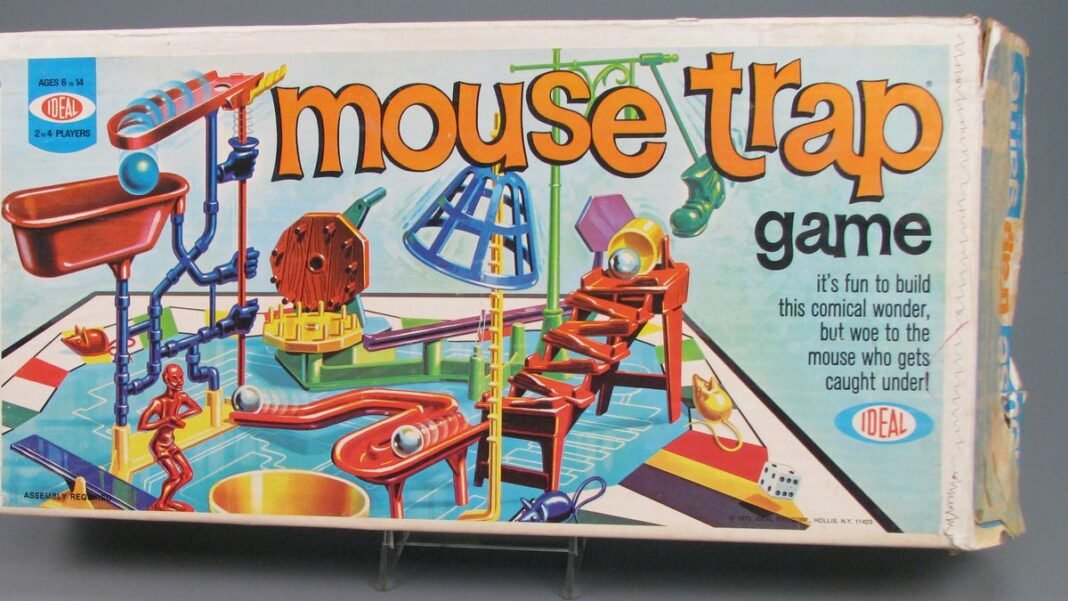

The creator behind some of the most beloved toys for kids in the 20th century, including Rock ’Em Sock ’Em Robots, Lite-Brite, and MouseTrap, has passed away at 99 years old.
Burt Meyer, the innovative mind responsible for lighting up childhoods post-World War II, passed away on October 30 in Illinois. Meyer was part of a pioneering group of designers who revolutionized the toy industry.
The surge in plastic molding and mass production after the war provided Meyer with the opportunity to bring his blend of engineering precision and childlike creativity to the market, ensuring his toys remained popular for over 60 years.
One of Meyer’s most iconic creations, Lite-Brite, was born in 1966 when he and his colleague Marvin Glass saw a display of colored lights in New York. Despite initial skepticism from engineers, Meyer’s vision for a safe and interactive toy for children came to life with the backlit box and templates that allowed kids to create glowing artworks.
Lite-Brite became a worldwide sensation, earning a spot in Time magazine’s top 100 toys list and induction into the US National Toy Hall of Fame. The toy continues to be sold today and has recently gained popularity through its appearance in the Netflix series Stranger Things.
Another of Meyer’s successful inventions, Rock ’Em Sock ’Em Robots, evolved from an abandoned boxing concept, revamped with comical robot characters and a unique head-popping action. This classic toy has been featured in Toy Story 2 and is now being considered for a live-action adaptation in Hollywood.
Having spent much of his career at Marvin Glass & Associates, a leading toy design firm, Meyer later established his own company, Meyer/Glass Design, where he created hits like Gooey Louie and the Pretty Pretty Princess game. His son, Steve, eventually took over the business.
Born in 1926 as Burton Carpenter Meyer, he first served in the US Navy before delving into the toy industry. Even in retirement, Meyer’s passion for engineering persisted, as he enjoyed building and flying small airplanes near Chicago well into his 80s.
Meyer often drew parallels between flying and toy design, emphasizing the importance of utilizing all resources effectively. He cherished his legacy, evident from his car’s license plate reading TOYKING, and took pride in hearing people reminisce about playing with his creations.