
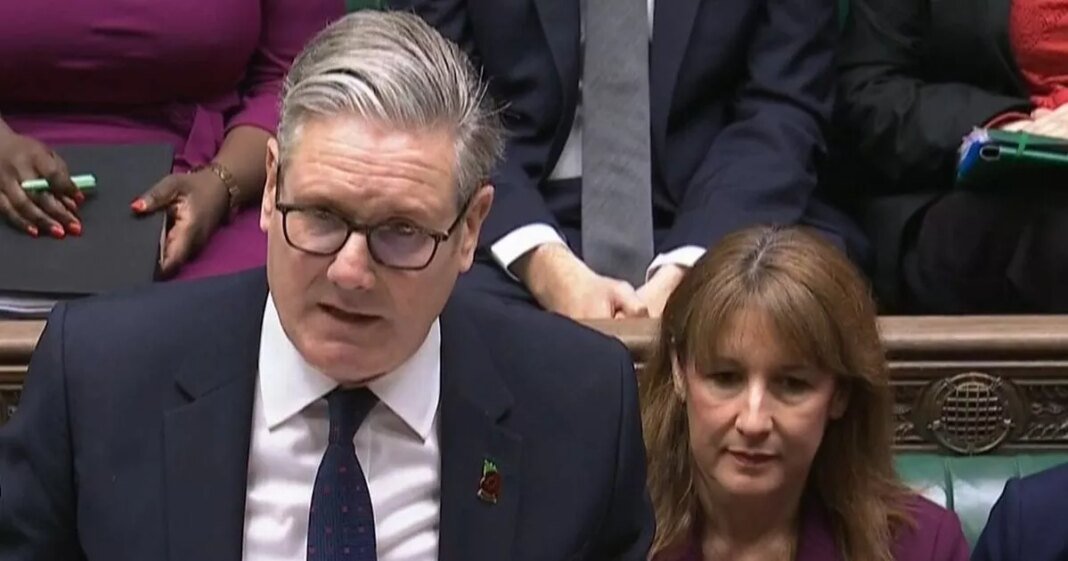

Keir Starmer, during a recent session of PMQs, refrained from ruling out a potential increase in income tax beyond what was promised in the Labour Party’s manifesto. Despite the Prime Minister’s assurance of no return to austerity measures, he did not explicitly reiterate the party’s commitment made during the previous General Election to refrain from raising taxes on working individuals, including income tax, VAT, and national insurance.
When questioned by Conservative leader Kemi Badenoch at PMQs about upholding the manifesto pledge, Mr. Starmer evaded a direct response and indicated that the government’s fiscal plans would be disclosed during Chancellor Rachel Reeves’s Budget presentation on November 26.
Ms. Badenoch highlighted Labour’s previous pledge not to raise income tax, national insurance, or VAT, prompting the Prime Minister to emphasize positive economic indicators such as increased retail sales, lower inflation rates, upgraded growth projections, and record highs in the UK stock market. Mr. Starmer reiterated the government’s commitment to unveil its economic strategies at the upcoming Budget, aiming to fortify the economy, reduce NHS waiting lists, and secure a brighter future for the nation.
Following the PMQs session, the Prime Minister’s press secretary declined to reiterate the party’s stance outlined in the manifesto regarding shielding working individuals from specific tax hikes, citing the forthcoming Budget announcement and the need to await the final forecasts from the Office for Budget Responsibility (OBR).
Reports suggest that Chancellor Reeves is contemplating an income tax increase to address a substantial budget deficit of £20-£30 billion and comply with spending regulations. One potential scenario under review involves adding 1p to the basic income tax rate, estimated to generate approximately £8 billion in revenue. Additionally, speculation points to a potential elevation of higher income tax rates in the November 26 Budget, affecting individuals earning above £50,271 at a 40% rate and those earning over £125,140 at a 45% rate. The Treasury declined to comment on these speculations regarding tax adjustments.
At Reach and its affiliated entities, user data may be collected through cookies and similar identifiers to enhance website experiences, analyze usage patterns, and provide personalized advertisements. Users have the option to opt out of data sharing/selling by selecting the appropriate setting on the website. By using the services provided on the website, users are deemed to consent to the use of cookies in line with the Privacy Notice and Terms and Conditions outlined on the site.