
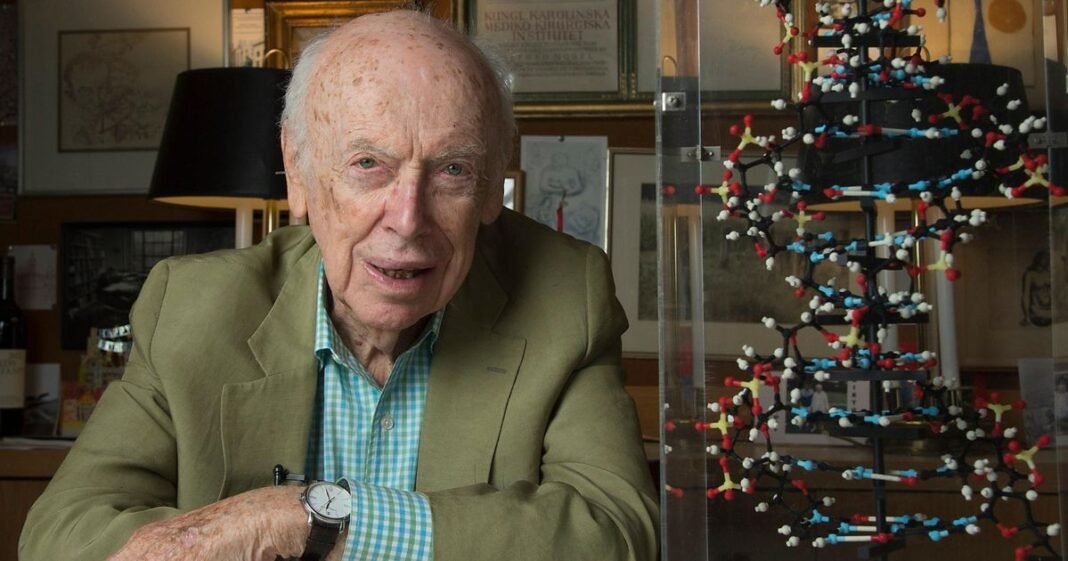

Celebrated scientist James Watson, a key figure in the discovery of the DNA double helix structure, has passed away at the age of 97. His groundbreaking work in 1953 revolutionized fields such as medicine, crime investigation, genealogy, and ethics. Cold Spring Harbor Laboratory, where Watson dedicated many years of research, confirmed his death.
The collaboration between Watson and his peers led to the realization of DNA’s double helix composition, earning them a Nobel Prize in 1962. This breakthrough provided crucial insights into genetic information storage and cell replication processes. The iconic double helix image became synonymous with scientific progress, transcending into popular culture and art.
While this discovery paved the way for advancements like genetic manipulation, gene therapy, forensic identification, and ancestry tracing, it also sparked ethical debates on genetic engineering’s implications. Watson acknowledged the monumental impact of their findings on both scientific advancements and societal discourse, emphasizing the unforeseen repercussions.
Despite not achieving another groundbreaking discovery of similar magnitude, Watson’s contributions extended to educational materials, a bestselling autobiography, and leadership in the Human Genome Project. His dedication to nurturing young scientists and shaping science policy underscored his lasting influence in the scientific community.
Watson’s personal connection to genetic research stemmed from a familial health concern, as he hoped to gain insights into schizophrenia, a condition his son Rufus battled. However, Watson faced criticism in 2007 for controversial remarks suggesting racial disparities in intelligence, sparking public debate and scrutiny.
James Watson’s legacy as a pioneering scientist and influential figure in genetics and molecular biology endures, leaving an indelible mark on scientific progress and ethical considerations in the realm of genetic research.