
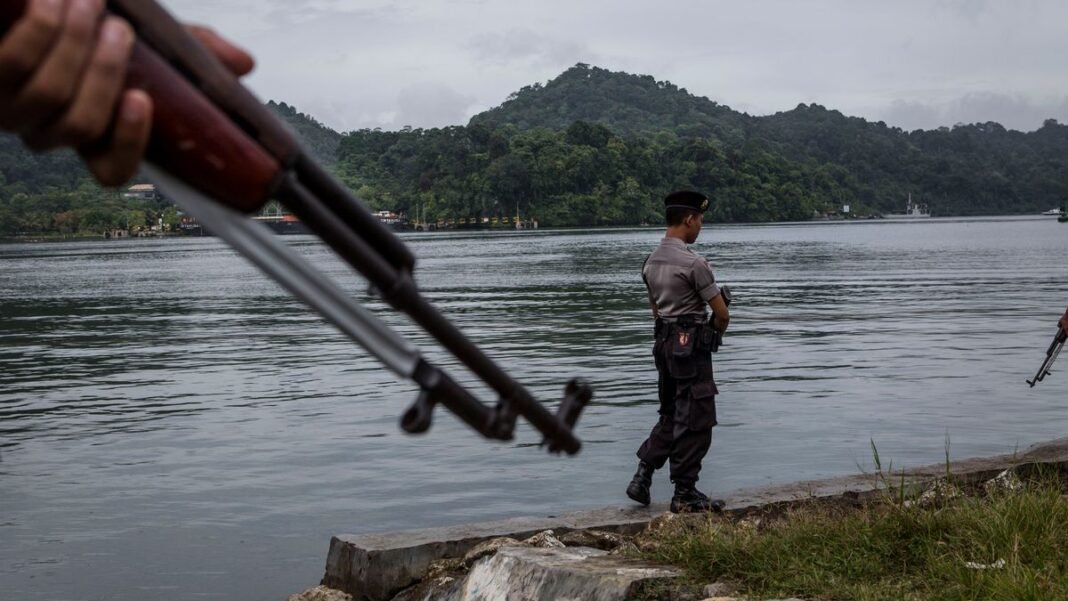

A member of a group tasked with carrying out executions has shared chilling details about the potential fate awaiting Lindsay Sandiford, a British grandmother, if she had not been released.
Indonesia is infamous for its severe penalties for offenses like drug trafficking, often resulting in death sentences, with a grim execution process. A police officer has outlined the harrowing firing squad procedure and its specifics.
Lindsay Sandiford, a 69-year-old British grandmother, faced the threat of execution after receiving a death sentence in 2013 for smuggling £1.6 million worth of cocaine into Indonesia from Thailand a year earlier. She spent 13 years incarcerated in Kerobokan Prison in Bali, awaiting her destiny.
However, this year brought confirmation that Sandiford would be repatriated to the UK and spared from facing the firing squad. Recently, she returned to the UK on a flight departing from Bali, closing a distressing chapter in her life as a former legal secretary.
Punishments for offenses such as drug trafficking in Indonesia are severe, often leading to death sentences, with a terrifying execution method. Convicts are taken to a wooded area where they can choose to sit or stand, decide whether to have their eyes covered by a blindfold or hood, and have their hands bound with rope.
Before their fate, they are allowed to seek spiritual counsel and are dressed in white, with a mark placed on their shirt above the heart as a target for the armed soldiers.
The firing squad consists of 12 officers, some of whom have loaded rifles with live ammunition, ensuring uncertainty about who fires the lethal shot. Officers in the squad are selected based on their marksmanship, mental acuity, and physical fitness.
Standing at a distance of five to 10 meters from the convicts, the firing squad follows orders to shoot. A police officer from the firing squad on the prison island of Nusa Kambangan disclosed the grim details of his role.
Part of the Indonesian police Mobile Brigade (“Brimob”), the officer, who chose to remain anonymous, described the emotional challenge of tying the person to the pole as their final human contact before the execution. He quietly utters, “Sorry, I’m just doing my job,” as he carries out his duty.
He recounted the process, stating, “We see the person close up, from when they are alive and talking, until they die. We just come in, grab the weapon, shoot, and wait for the dying to finish. Once the ‘bam’ of the gun we wait 10 minutes, if the doctor pronounces him dead then we return, that’s about it.”
The officer emphasized the swift nature of the process, noting that the individual goes limp immediately as life ceases. If a prisoner survives the initial volley, another officer is tasked with delivering a final, fatal shot at close range.
Regarding his role, the officer views it as fulfilling lawful orders and upholding his oath as a soldier. He highlighted that the prisoner violated the law, and as officers, they are duty-bound to execute the command.
Reports suggest that Indonesia conducts executions sporadically, leaving many inmates languishing on death row for more than a decade.