
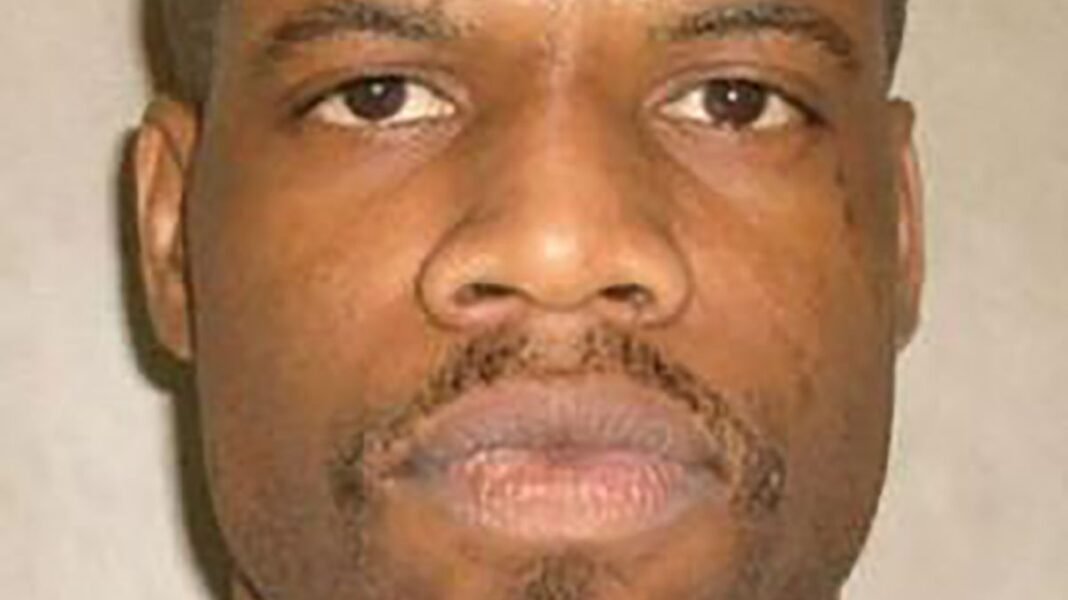

A death row convict faced a prolonged and distressing execution, enduring around 45 minutes of suffering as the procedure went awry, resulting in a grisly scene with blood splattered across the execution chamber.
Clayton Lockett, aged 38, was condemned to death in April 2018 at the Oklahoma State Penitentiary in the United States following convictions for murder, rape, and kidnapping. His heinous crime involved the shooting of 19-year-old Stephanie Neiman, who was then buried alive by Lockett and his associates in 1999 after interrupting a robbery.
On the day of the execution, medical teams struggled for over 50 minutes to find suitable veins for the lethal injection. Eventually, they located a vein in Lockett’s groin after multiple failed attempts that resulted in numerous punctures on his arms, legs, and neck.
During the procedure, the doctor inadvertently pierced an artery while trying to insert the needle into Lockett’s groin, causing a spray of blood that covered the chamber, leading to chaos and confusion. Witnesses described Lockett’s distressing final moments as he thrashed about, lifted his head and shoulders, and emitted groans before the blinds were drawn over the witness chamber about 16 minutes into the process.
It took an excruciating 43 minutes for Lockett to succumb to the lethal injection. The scene was described by a paramedic present as chaotic, with blood everywhere and a lack of awareness from the medical personnel about the severity of the situation.
Following the botched execution, Governor Mary Fallin initiated an independent review and suspended other scheduled executions in Oklahoma to reassess the state’s protocols. This incident sparked a national discussion on the drugs used in executions, particularly questioning the effectiveness of midazolam, the sedative administered in Lockett’s case.
Critics attributed the catastrophic event to inadequate training of medical staff and the lack of transparency regarding execution procedures, highlighting broader issues beyond just the drug cocktail used. Lockett’s fellow inmate, Charles Warner, was set for execution in the same chamber shortly after but faced delays until 2015 due to the failed execution attempt.
Warner’s lawyer, Madeline Cohen, present during Lockett’s ordeal, condemned the execution as a form of torture and demanded a thorough investigation into the incident. She underscored the necessity for complete disclosure of information regarding the drugs utilized, including their quality, effectiveness, source, and testing results.