
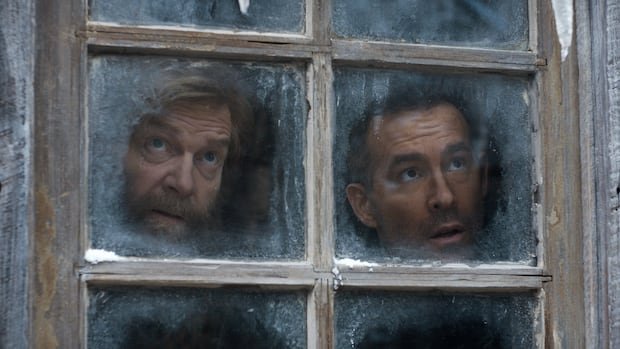

In a surprising revelation, the movie “Mayday” delves into the theme of recognizing the humanity in individuals from different backgrounds. Set in the 1980s during the Cold War, the film follows the story of an American navy pilot, Troy (played by Ryan Reynolds), who is rescued by a former KGB agent, Nikolai (portrayed by Kenneth Branagh), after crashing in Soviet territory. The plot unfolds as Nikolai’s altruistic actions to protect Troy are initially viewed with skepticism, given the political tensions of the era.
The film challenges the notion that people from opposing sides of the Cold War conflict are inherently different or devoid of empathy. As Nikolai and Troy navigate dangerous situations, including evading a rogue KGB agent and his ruthless pursuers, the narrative highlights the complexities and commonalities among individuals, regardless of their nationalities.
“Mayday” strikes a balance between action-packed sequences and comedic elements, with Branagh portraying a charismatic yet kind-hearted character, and Reynolds as the witty counterpart. The film’s cinematography, characterized by long, fluid shots, adds a unique touch to the storytelling, contrasting with the fast-paced editing common in contemporary films.
While the movie unfolds as a typical American action flick of the Reagan era, it also subtly challenges the simplistic portrayal of geopolitical adversaries. Through the interactions between Nikolai and Troy, the film prompts viewers to question the dichotomous views of good and evil prevalent during the Cold War.
Ultimately, “Mayday” prompts audiences to reconsider preconceived notions about the “enemy” and highlights the shared humanity that transcends political divides. The film navigates the complexities of international relations and propaganda, offering a nuanced perspective on historical conflicts and the individuals caught in the midst of them.