
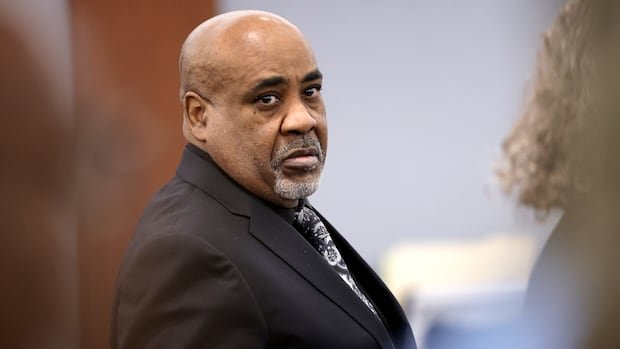

After a lengthy trial in Las Vegas, Duane “Keffe D” Davis, aged 63, has been found guilty by a jury for orchestrating the 1996 killing of renowned rap figure Tupac Shakur. This marks the first conviction in a case that has captivated hip-hop enthusiasts for decades. Davis faces the possibility of a life sentence after being convicted of murder with a deadly weapon.
During the three-hour deliberation following the trial, emotions ran high in the courtroom. Shakur’s sister, Sekyiwa “Set” Shakur, was visibly distraught, while Davis’s son covered his face in reaction to the verdict.
Prosecutors argued that Davis, seeking revenge after his nephew was assaulted by Shakur and Death Row Records co-founder Marion “Suge” Knight, obtained a gun and actively pursued the two individuals. Despite discrepancies in Davis’s recounting of events over the years, the prosecution maintained that key details, such as Davis placing himself inside a white Cadillac from which the shots were fired, remained consistent.
In his defense, attorney Michael Sanft challenged the jury to find concrete evidence linking Davis to the crime scene in Las Vegas on the fateful night of Shakur’s shooting. Sanft highlighted the absence of surveillance footage or phone records placing Davis at the scene.
The case has attracted widespread attention from both hip-hop enthusiasts and legal experts. Shakur, a highly influential rapper, was fatally shot in Las Vegas on September 7, 1996, when a white Cadillac pulled up beside his vehicle at a red light and opened fire. While Shakur succumbed to his injuries six days later, Knight survived the attack.
Davis confessed to being present in the Cadillac and passing the gun to others in the vehicle’s backseat as an act of retaliation for the earlier altercation involving his nephew. Under Nevada law, an individual aiding in a murder can be held liable for the crime. Davis is the sole surviving member among the four men alleged to have been present in the Cadillac during the shooting.
Prosecutors emphasized that Davis’s statements, if believed by the jury, did not require additional corroboration. While they did not allege that Davis directly pulled the trigger, they argued that his role in providing the weapon and orchestrating the attack rendered him criminally responsible for Shakur’s murder.
Davis’s 2019 memoir, Compton Street Legend, was scrutinized during the trial, with prosecutors citing it as evidence of his involvement. Despite some discrepancies in details, prosecutors maintained that the core narrative remained consistent. Conversely, the defense contended that Davis’s memoir was not a means of profiting from the crime.
In a dramatic moment during the trial, prosecutor Marc DiGiacomo pointed to a scrapbook maintained by Davis containing articles about Shakur, suggesting a disturbing fixation on the murder.