
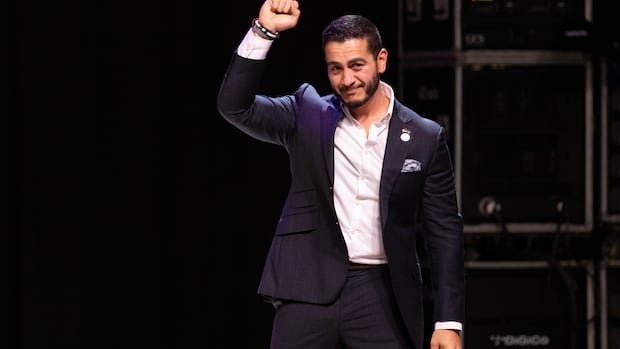

Abdul El-Sayed’s triumph in Michigan’s Democratic Senate primary is being hailed as a significant victory for the party’s progressive faction. In this critical battleground state, the former public health official clinched a closely contested race with a smaller budget compared to Haley Stevens, a moderate contender who received backing exceeding $60 million US for her campaign.
El-Sayed’s win is part of a broader trend of primary successes for Democratic socialist and leftist candidates. Just recently, progressive Peggy Flanagan secured victory in Minnesota’s Democratic Senate primary. Despite these wins for left-leaning candidates, there are doubts among some political observers about their potential success in the upcoming midterm elections.
This situation raises questions about the Democratic Party’s trajectory and the potential presidential candidate for 2028. To delve into these topics, Washington correspondent Katie Simpson is joined by “Front Burner” host Jayme Poisson and Bloomberg senior White House reporter Josh Wingrove in a discussion.
Reflecting on the current dynamics within the Democratic Party, Fareed Zakaria highlighted the need for a shift towards the center on cultural and social issues, including the “woke” agenda, crime, and immigration, while maintaining a progressive stance on economic matters. This perspective suggests a nuanced approach is required to resonate with the electorate and secure votes.
Drawing parallels to past elections, Wingrove noted similarities between the El-Sayed-Stevens map and the Bernie-Hillary map from 2016, emphasizing a recurring pattern in Democratic politics. With figures like Alexandria Ocasio-Cortez emerging as prominent faces of progressivism, the stage is set for a diverse range of candidates in future elections, including potential clashes between moderates, establishment figures, and progressives.
As the Democratic Party navigates through a period of rebranding and strategic recalibration, the significance of inspiring campaigns with visionary leadership becomes evident. The need for substantial ideas and a clear message beyond mere opposition to existing norms underscores the evolving landscape of American politics.
Looking ahead, the Democratic Party faces a period of potential generational change, as seen in Michigan where a younger cohort of candidates vies for leadership roles in contrast to the established political figures of the past. These shifts in party dynamics signal a broader transformation in the political landscape, hinting at a new era of Democratic leadership and vision.