
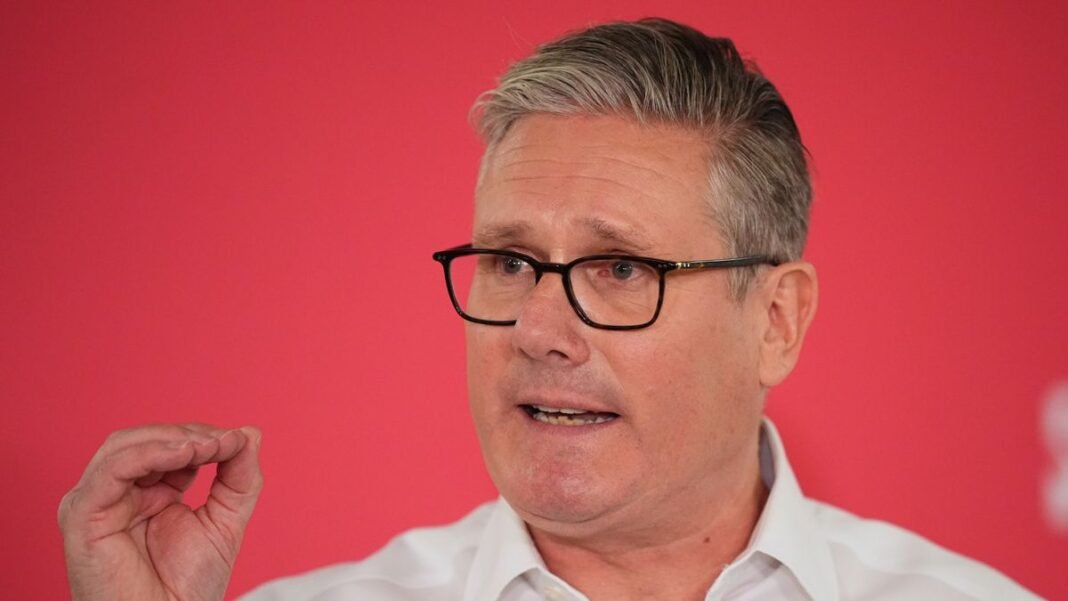

The uncertainty surrounding the future of Prime Minister Keir Starmer is causing concerns among experts, who warn that it could lead to an increase in mortgage costs. Financial markets have been rattled by the ongoing drama, as Sir Keir Starmer faces mounting pressure to step down but vows to continue the fight.
The impact of this political turmoil is evident in the bond market, where the yield on benchmark 10-year gilts jumped by 0.10% to reach 5.10%, nearing the highest levels seen since 2008 during the Iran war. The 30-year yield, which is influenced by fiscal worries, climbed to 5.81%, the highest since 1998. This surge in bond yields could potentially add around £2 billion to the government’s already significant borrowing costs, which were estimated to be £110 billion for the year.
The looming question is what comes next, as the outcome could have far-reaching implications not only for public finances but also for millions of ordinary borrowers and savers. Investors and economists are closely monitoring the situation, with concerns about the impact on government stability and the financial markets.
The rise in gilt yields, although not as drastic as previous spikes, could still have implications for mortgage rates. The uncertainty surrounding Starmer’s future and the potential leadership change could lead to further increases in borrowing costs. Fixed-rate mortgages, influenced by gilt yields and future interest rate expectations, may see prolonged higher rates due to the ongoing political upheaval.
The repercussions extend beyond mortgages to pensions and household finances. The volatility in the bond markets can quickly affect retirement savings and pension stability, especially as pension funds are often exposed to bonds and gilts. The recent climb in gilt yields due to various economic factors could impact borrowing costs and mortgage rates, affecting households planning to remortgage this year.
The overall market sentiment is cautious, with shares in banks experiencing a decline amid speculations of policy shifts and economic uncertainties. The situation is further compounded by global factors, such as tensions surrounding Iran and geopolitical developments, which are adding to the market instability. Investors are advised to stay vigilant as the ongoing political turmoil could lead to prolonged economic challenges and impact various sectors, including pensions and savings.
In conclusion, the political uncertainty surrounding Prime Minister Keir Starmer’s future is not only affecting government stability but also has the potential to impact the financial well-being of individuals and the overall economy. Stakeholders are closely monitoring the situation for further developments that could influence market dynamics and economic growth.