
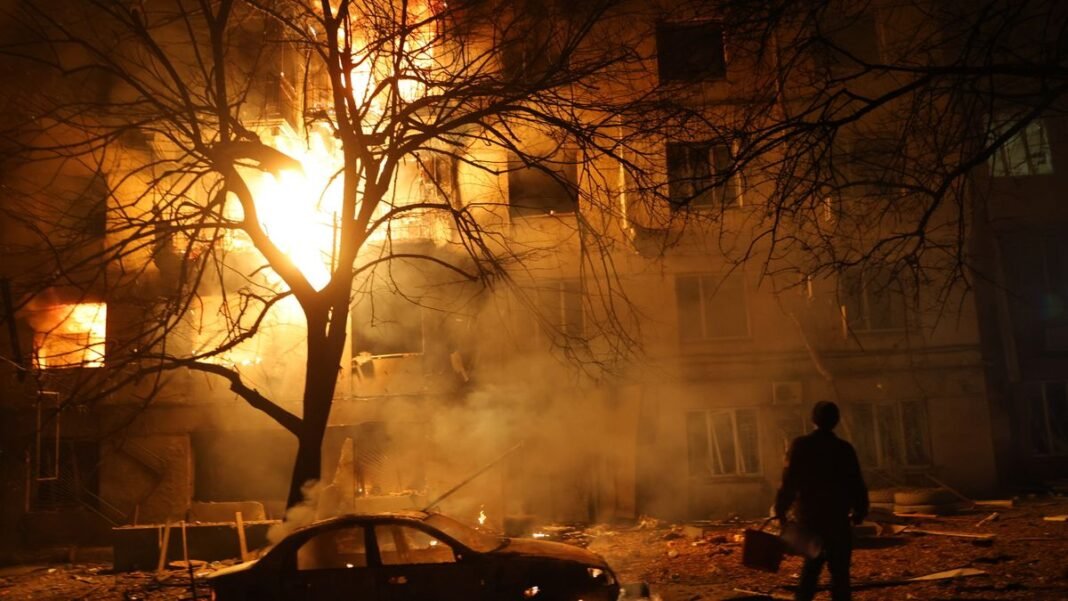

Kremlin forces intensified their attacks on Ukraine following adjustments to the controversial 28-point US peace plan that Kyiv had recently embraced. The overnight assault saw missiles hitting numerous residential buildings, resulting in fires and causing injuries to 19 civilians in retaliatory strikes.
The focus of the latest Russian attacks was on the Zaporizhzhia region, following Ukrainian President Volodymyr Zelensky’s confirmation that significant modifications had been made to the pro-Kremlin peace proposals. The original 28-point plan, attributed to Donald Trump and believed to be influenced by the Kremlin, had provisions that restricted Ukraine’s military strength to 600,000 troops, proposed territorial concessions to Russia, and barred Ukraine from joining NATO.
However, the revised deal now aims to remove constraints on Kyiv’s military capacity, advocate for a ceasefire preceding a final peace agreement, avoid territorial concessions, and move towards achieving peace, as stated by Zelensky. Notably, reports revealed that President Trump’s top negotiator had advised a key aide to Vladimir Putin on how to present the pro-Kremlin plan, shedding light on Trump’s shifting stance towards Ukraine and Putin’s military objectives.
The negotiations between Steve Witkoff and Yuri Ushakov included suggestions to arrange a call between Trump and Putin, with Ushakov agreeing to convey Putin’s admiration for Trump as a proponent of peace. Despite the authenticity of the recordings not being disputed, Ushakov declined to discuss the details but indicated ongoing discussions with Witkoff regarding fine-tuning the peace plan, prompting concerns from U.S. Rep. Don Bacon about Witkoff’s alleged bias towards Russia.
As the controversy surrounding the peace plan unfolds, White House communications director Steven Cheung defended the ongoing diplomatic efforts, emphasizing the commitment to achieving peace through daily engagements with Russian and Ukrainian officials. Secretary of State Marco Rubio affirmed that the proposal was a collaborative effort involving the United States, Russia, and Ukraine, refuting claims of unilateral influence.
The evolving developments underscore the complexities and diplomatic maneuvers surrounding the peace negotiations, as global attention remains focused on the resolution of the conflict between Ukraine and Russia.