
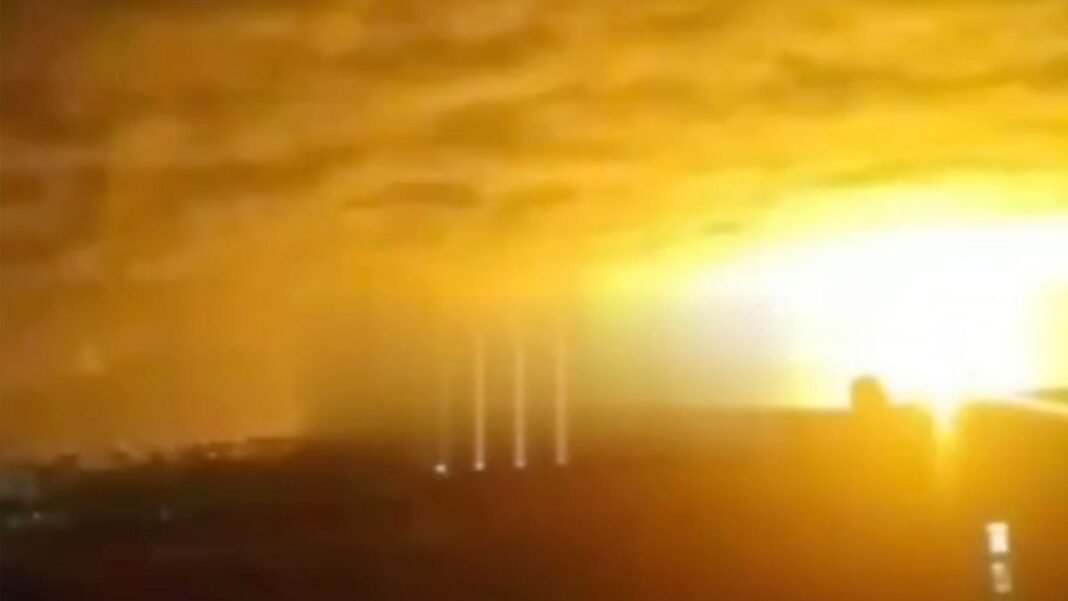

A major Russian aircraft manufacturing plant was struck by a devastating Ukrainian attack overnight, resulting in one of Vladimir Putin’s laser-equipped aircraft catching fire. The intensity of the assault caused the plant to illuminate as if from a nuclear explosion. Initial reports indicate that the A-60 aircraft, known for its bulbous nose, was set ablaze during the attack on Taganrog, coinciding with significant strikes between the two sides as crucial US-led peace talks were ongoing in Abu Dhabi.
In response to the escalating conflict, NATO deployed four warplanes as Russian drones carried out attacks on Ukraine’s Odesa region, breaching Romanian airspace. Russia continued its offensive by targeting civilians in Kyiv, resulting in the deaths of at least six individuals, including an 86-year-old woman. The chaos unfolded as residents in various locations cried out for assistance, with drone strikes causing fires in residential buildings and destroying critical infrastructure such as power plants supplying hot water heating.
Simultaneously, efforts to negotiate peace advanced, with US Army Secretary Daniel Driscoll arriving in Abu Dhabi for discussions with key military figures from Ukraine and Russia to address differences in the military aspects of the peace plan. The Ukrainian strike on Taganrog-Yuzhny airfield specifically targeted the Beriev aircraft manufacturing plant, where an A-60 aircraft capable of carrying laser weapons was reportedly burning. The plant, which also services Putin’s specialized aircraft like the Ilyushin Il-80 ‘Doomsday’ plane, suffered casualties and significant damage during the attack.
The night assault, described by Governor Veniamin Kondratyev as one of the most prolonged and extensive during the conflict, also saw tragic incidents in Novorossiysk, where a misfiring Russian air defense missile struck a residential building. The destructive exchanges between the two sides were part of a broader strategy to pressure Ukraine into accepting an unfavorable peace agreement. Amid the chaos, NATO forces scrambled to intercept Russian drones breaching airspace, underscoring the escalating tensions in the region.
As the conflict unfolded, Russian officials criticized proposed changes to the peace plan, labeling them as unproductive. The attacks persisted in various regions, including Gelendzhik and Tuapse, causing further destruction. In Kyiv, critical infrastructure like power plants and a hydroelectric station were targeted, leading to widespread outages and disruptions. The situation remains volatile, with ongoing military maneuvers and clashes underscoring the challenges in reaching a resolution to the conflict.