
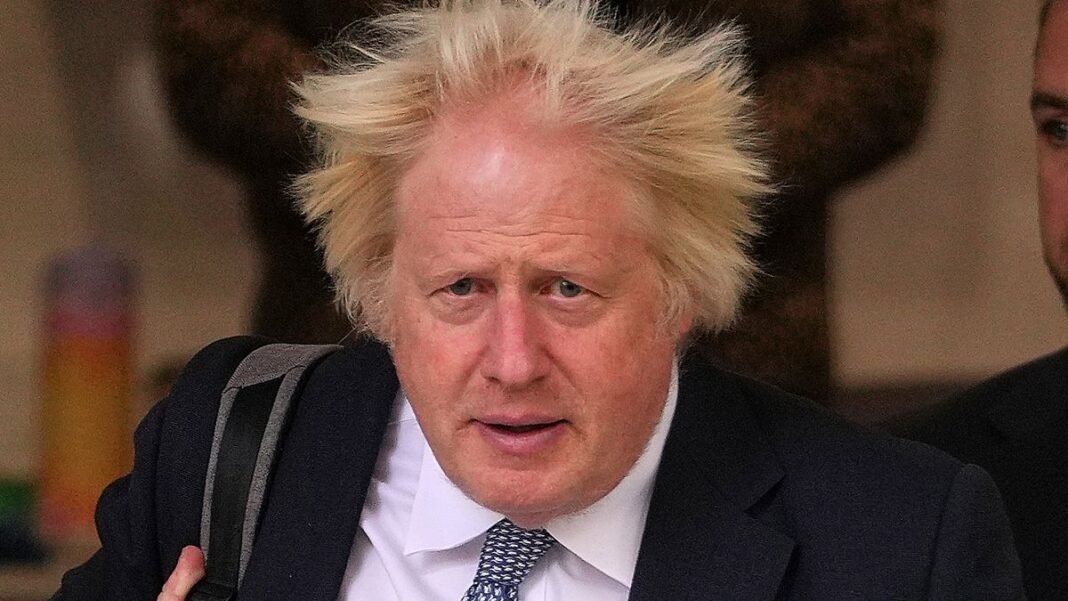

Boris Johnson’s political future is not necessarily doomed despite the scathing revelations of the Covid Inquiry, according to Michael Gove. Gove, a prominent figure in the Conservative party and a former member of Johnson’s cabinet during the pandemic, refuted allegations of a toxic and sexist environment under Johnson’s leadership contributing to the government’s chaotic response. However, he did express regret on behalf of the Conservative Party for the mishandling of the crisis.
Acknowledging that there would be understandable anger from bereaved families due to the failures during the crisis, Gove conceded that the actions and communications within No10 were far from perfect. He emphasized that during a crisis, leaders do not operate in a manner akin to a Jane Austen novel.
Regarding the assertion by Baroness Heather Hallett that 23,000 lives could have been saved with quicker action by the then-PM, Gove disagreed with the notion that Johnson’s political career should be terminated as a result of the report’s findings. He defended Johnson’s decision-making process, highlighting the challenging balance between liberty restrictions and healthcare accessibility, which he believes Johnson grappled with effectively, ultimately leading to a successful vaccine rollout.
While Gove admitted to significant errors being made, he took the opportunity on BBC Radio 4’s Today Programme to extend apologies to those who suffered losses during the pandemic and to acknowledge the mistakes made by the government and the Conservative Party during that period.
Contrary to Lady Hallett’s report implicating a toxic culture within Number 10 contributing to the inadequate pandemic response, Gove disputed such claims. He conceded that there were instances of inappropriate behavior and language, but stressed that governing during a crisis required a pragmatic approach rather than resembling a literary work.
The damning Covid Inquiry report exposed governmental chaos and a lack of seriousness towards the virus, resulting in 23,000 deaths during the initial pandemic wave. Highlighting a “toxic” culture under Johnson’s leadership, the report criticized the frequent policy changes and a lack of swift action by key officials.
The report also indicated missed opportunities for earlier interventions, with delayed lockdowns deemed inevitable due to insufficient measures like social distancing and household quarantine. Implementing a lockdown a week earlier could have significantly reduced deaths during the initial wave.
The report criticized the UK governments’ delayed response to the virus, emphasizing the failure to recognize the imminent threat posed by the virus by the end of January 2020. The lack of urgency and accountability within the government, particularly in February 2020, was deemed unacceptable, with Health Secretary Matt Hancock facing criticism for overpromising and underdelivering.
Overall, the report underscored the need for prompt and decisive action in future crises to avert unnecessary loss of life.