
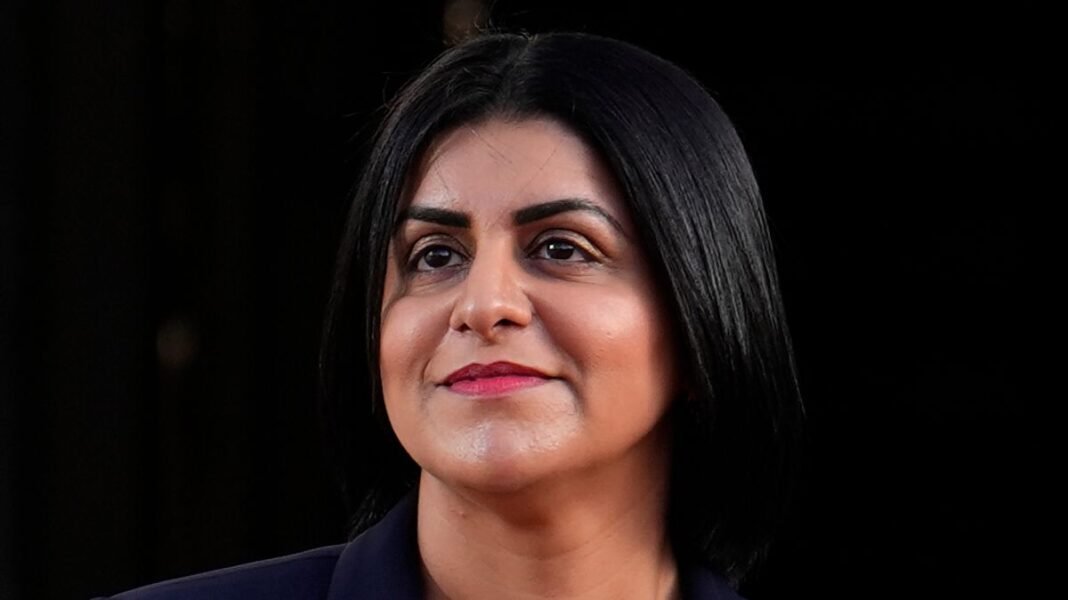

Labour MP Shabana Mahmood has outlined significant alterations to immigration regulations, emphasizing the necessity for individuals to “earn” their entitlement to permanent residency.
The Home Secretary revealed a series of upcoming modifications that will result in extended waiting periods for migrants seeking settlement in the UK, with the current requirement of five years being increased to a standard 10 years. Nevertheless, Mahmood specified that certain groups such as NHS personnel, high-income earners, and volunteers will receive expedited processing. Conversely, individuals who have utilized benefits or entered the country illegally will face repercussions.
Additionally, four new criteria must be satisfied before obtaining settled status, marking a departure from the existing system. These adjustments come shortly after Mahmood introduced a separate set of revisions to the UK’s asylum rules, provoking strong opposition.
Under the proposed revisions, expedited settlement will be granted to those who significantly contribute to the nation’s well-being, such as higher taxpayers qualifying after five years and top-rate taxpayers after three years. Furthermore, holders of global talent visas and senior public servants, including NHS healthcare professionals, will be eligible for settlement after specific timeframes.
Furthermore, individuals engaged in extensive volunteer work within their local communities may qualify for accelerated settlement under the new proposals, potentially reducing their qualifying period by three to five years.
To be granted indefinite leave to remain, individuals must meet four essential criteria, including a clean criminal record, proficient English skills at A-level standards, absence of debt, and a minimum of three years of National Insurance contributions, as outlined by Mahmood.
Emphasizing the notion that settlement in the UK is a privilege that must be earned, Mahmood highlighted the need for fairness in the immigration process, stating that settled individuals will not be affected by the revised rules. She cautioned that uncontrolled migration could fuel division and hatred, underscoring the importance of demonstrating that a well-managed migration system can benefit the country.