
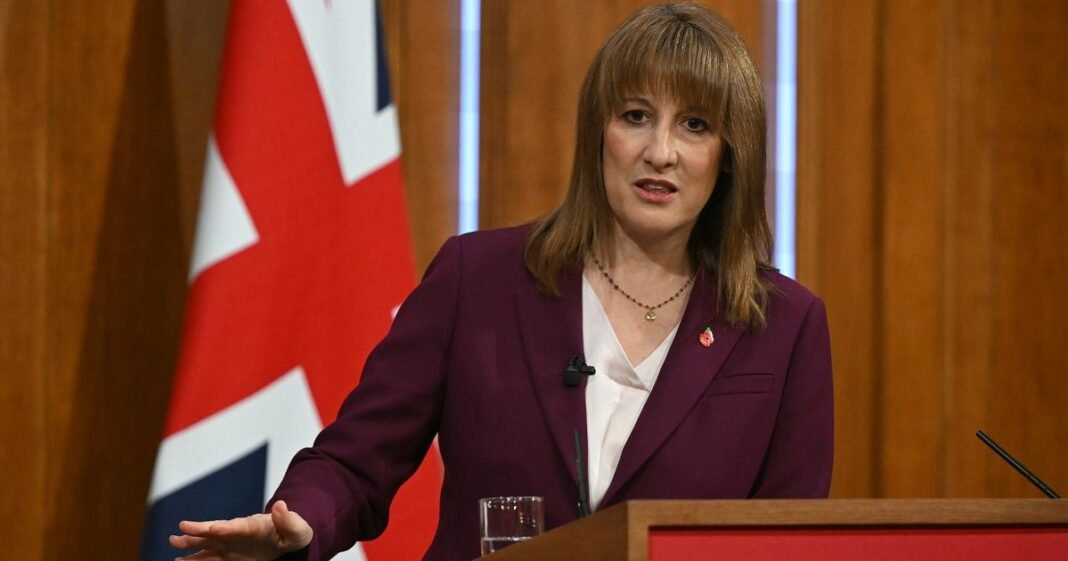

Government borrowing costs surged and over £26 billion was wiped off the FTSE 100 due to the Labour Party’s apparent reversal on income tax plans. Reports suggesting that Chancellor Rachel Reeves and Prime Minister Keir Starmer abandoned the tax hike, which would have violated their election promises, rattled investors who had anticipated its implementation based on recent speculations.
The decision to shelve the income tax plan, which contradicted the manifesto, came after positive forecasts from the Office for Budget Responsibility. While this development could benefit the Chancellor, the uncertainty surrounding the policy unsettled financial markets.
Yields on 10-year UK government gilts surged to 4.57% initially, the largest increase since July, before settling around 4.50%. 30-year gilts also saw a rise to 5.32%. Gilts act as government IOUs used to secure funds for expenditures surpassing tax revenues.
Reeves aims to reduce interest payments on the government’s substantial debt, projected to exceed £110 billion this year. The higher gilt yields could lead to increased fixed-rate mortgage costs, affecting new borrowers and those seeking to remortgage.
The FTSE 100 index plummeted around 120 points, marking its largest single-day drop since April, while the pound depreciated by 0.5% against the US dollar. The Treasury closely monitors gilt yields and currency fluctuations to assess market responses ahead of the upcoming Budget on November 26.
Financial experts expressed concerns over the potential impact of the Labour Party’s tax policy U-turn on gilt markets, attributing the sell-off to fears about the UK’s deficit. While the market reaction may be an overreaction, uncertainties persist regarding future government plans.
Despite recent economic growth slowdowns, the FTSE 100 had previously reached record highs before the recent downturn. The market volatility presents opportunities for strategic investors to consider buying opportunities.
Concerns also arise as reports indicate a projected Budget deficit of approximately £20 billion, highlighting the challenges facing the government’s fiscal planning amid changing economic conditions.