
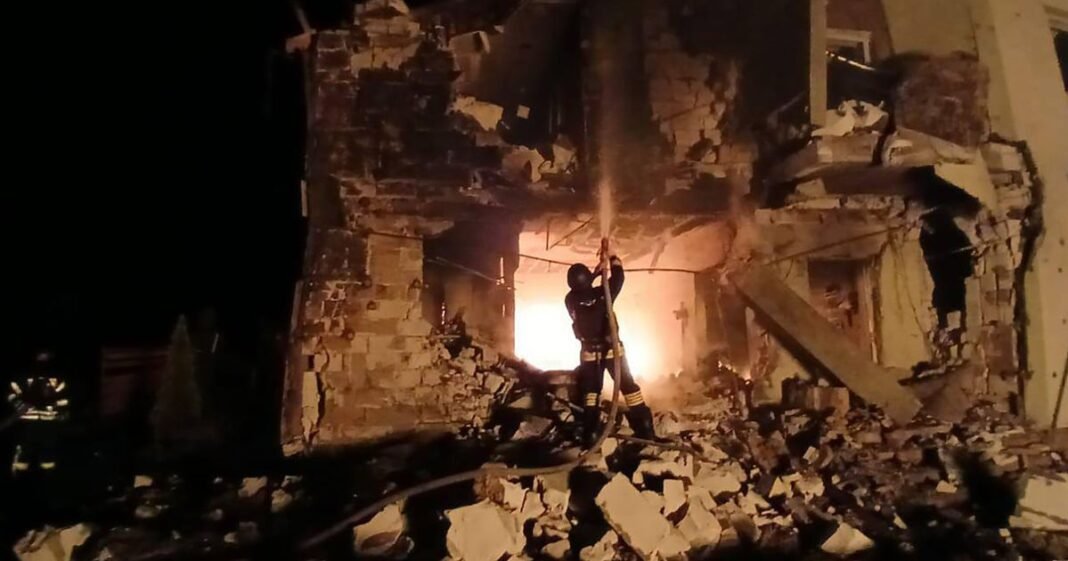

Poland and fellow NATO members swiftly deployed fighter jets in response to a massive attack by Vladimir Putin involving over 650 drones and 50 missiles on Ukraine. The assault caused extensive damage and widespread power outages across the nation.
Poland’s military heightened its alert status, sending out fighter jets and an early warning aircraft to protect Warsaw’s air defense and radar systems. The strikes by Russia on Ukrainian targets resulted in casualties, including the tragic deaths of a seven-year-old girl and injuries to several others, including children.
The attacks led to countrywide power disruptions, with Ukrainian Prime Minister Yulia Svyrydenko denouncing the deliberate attempt to plunge Ukraine into darkness and disrupt essential services as winter approached.
In a show of solidarity, Western border communities near Ukraine were also targeted, prompting Polish warplanes to be on standby to intercept any potential threats crossing into Polish territory.
Poland’s operational command confirmed the activation of air forces in response to the Russian aggression in Ukraine. Allied forces from Norway, Spain, and Turkey joined the operations, with German support through a Patriot missile system. Polish airports briefly closed during the operation, with patrols continuing until the situation was deemed under control.
Russia’s escalation included various lethal weapons like air-launched missiles, ballistic explosives, cruise missiles, and kamikaze drones, causing chaos and destruction in Ukraine. The attacks spread across different regions, inflicting damage, injuries, and knocking out vital infrastructure.
The city of Zaporizhzhia faced sustained strikes, resulting in the destruction of an entire apartment block. President Volodymyr Zelensky confirmed the impact of the air assaults, leading to significant losses despite some successful interceptions.
Communities in Dnipro and Ivano-Frankivsk also came under attack, with power outages reported as a result of the strikes. Key energy facilities in various regions were targeted, disrupting essential services and triggering emergency response measures to ensure continuity of basic supplies.
Poland and NATO’s response to the crisis was swift, with Polish Defense Minister Władysław Kosiniak-Kamysz highlighting the ongoing challenges and the need for vigilant defense measures. The alliance’s proactive stance was evident in intercepting potential threats and maintaining readiness in the face of escalating tensions.
Recent airspace violations by Russian military aircraft in neighboring countries had already put NATO’s eastern flank on alert, indicating a pattern of provocative actions by Russia. The alliance’s coordinated response and readiness to defend territorial integrity underscored the gravity of the situation.
In a statement, a Kremlin spokesperson accused NATO of being at war with Russia, alleging support for the Ukrainian government as a form of direct involvement in the conflict. This narrative echoed previous claims by Russian officials, portraying Western assistance to Ukraine as fueling the ongoing crisis.
The developments in Ukraine and the broader region point to a precarious security situation, with NATO and its member states remaining vigilant against further provocations and ensuring collective defense in the face of escalating tensions.