
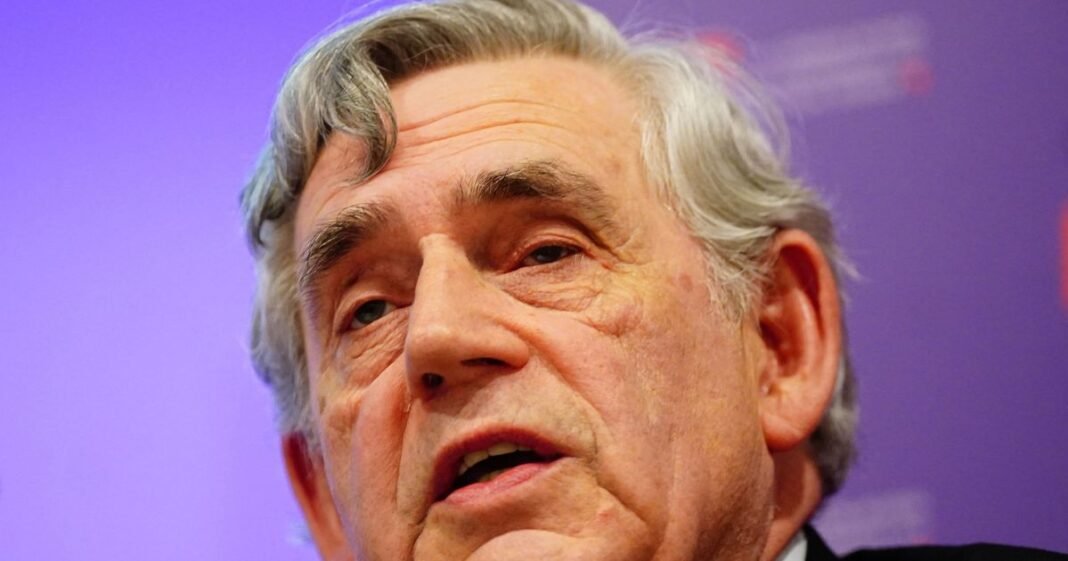

Gordon Brown is set to address the issue of child poverty in Britain, labeling it as a “shameful epidemic.” The former Labour Prime Minister will emphasize in a significant speech that child poverty is a significant factor contributing to social disparities and poses the most significant risk to the nation’s economy. With approximately 4.5 million children living in poverty, experts have cautioned that this number could rise without immediate government intervention.
Brown will assert that the current child poverty crisis in the UK not only fuels social divides but also presents a severe economic threat due to the lack of preparation of young individuals for future employment. He has previously advocated for the elimination of the two-child benefit limit, a policy that has been criticized for perpetuating child poverty. Keir Starmer and Chancellor Rachel Reeves are contemplating revising or eliminating this austerity measure from the Tory era as part of a review on child poverty.
Recent projections by the Resolution Foundation indicate that child poverty rates could reach a record high of 34%, affecting approximately 4.8 million children by the end of the decade if immediate actions are not taken. Even partial measures, such as transitioning to a three-child limit, would still result in elevated child poverty rates by the decade’s end, according to the think tank.
Brown is expected to intensify pressure on the Chancellor to address child poverty in the upcoming Budget, advocating for the complete abolition of the two-child benefit limit. He will deliver this message during a speech commemorating the 60th anniversary of the Child Poverty Action Group, stating that lifting half a million children out of poverty is an achievable goal.
Highlighting public support for action against child poverty, Brown will reference polling data indicating that 64% of voters would endorse imposing higher taxes on gambling companies to fund efforts to reduce child poverty. Moreover, a significant portion of the public in constituencies across the country, including over 623 out of 632, supports this proposal, which could potentially generate £3.2 billion to eliminate the two-child benefit limit.
Brown is anticipated to advocate for the establishment of a permanent cross-party alliance comprising charities, foundations, businesses, and faith groups to collaborate with governments in all four nations to combat the escalating child poverty rates. Stressing the urgency of the situation, he will push for the removal of half a million children from poverty by April next year and address the concerning prevalence of child poverty in Britain.
The government is poised to release the findings of its child poverty review shortly, focusing on aspects such as the two-child benefit limit. Initiatives like extending free school meals and introducing new breakfast clubs for primary school children have also been mentioned as supportive measures to assist children in need.