
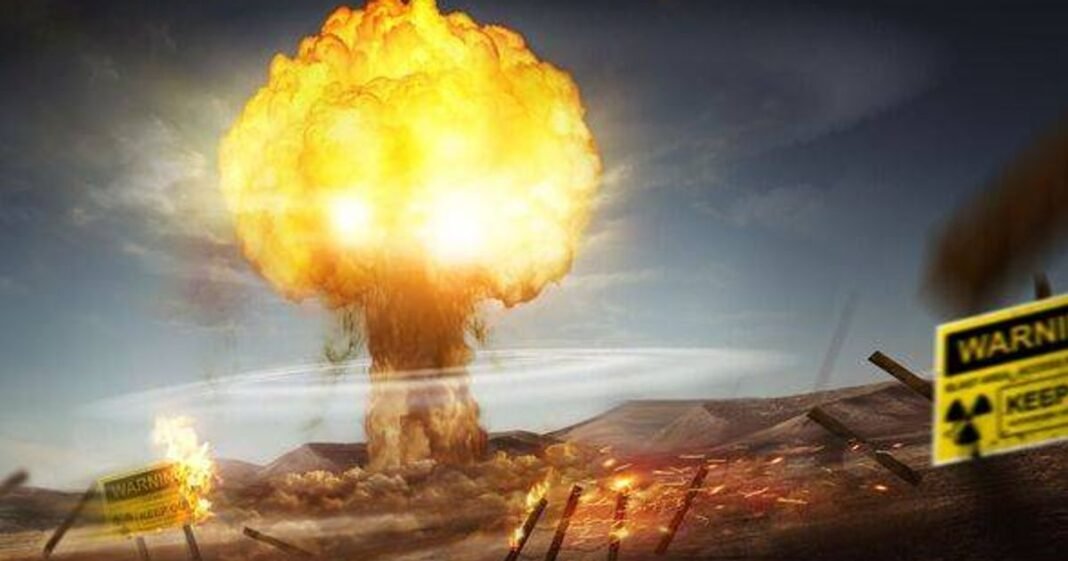

Britain is facing heightened concerns regarding its susceptibility to nuclear attacks amidst increasing global tensions. RAF Lakenheath in Suffolk, overseen by the United States, is anticipated to store US/NATO nuclear weapons soon, positioning the UK at the forefront of potential conflicts between the US and Russia.
The presence of American nuclear weapons on British territory significantly heightens the country’s risk of becoming a target. Military experts indicate that in a wartime scenario, Lakenheath would likely be targeted before other regions in the country.
Although analysts recognize the catastrophic global impact of a nuclear conflict involving the US, NATO, and Russia, it is crucial to understand the direct repercussions for British communities. The Campaign for Nuclear Disarmament cautions that a single nuclear strike on any town or city would have devastating consequences for the local populace and environment, with radioactive effects spreading far and wide.
A recent report highlights that a Russian warhead, like an SS-25 or SS-27, hitting London could result in nearly a million fatalities. Similarly, an attack on Glasgow might lead to 326,000 casualties, while Cardiff could see 196,000 lives lost.
The epicenter of a nuclear detonation is projected to reach extremely high temperatures, potentially obliterating human tissue within a 1.5 square mile radius. Historical events, such as the atomic bombings of Hiroshima in 1945, where shadows were seared into stone within a half-mile radius, serve as grim reminders of the devastating impact of nuclear weapons, claiming hundreds of thousands of lives.
In the event of a nuclear explosion, individuals up to four miles away from the blast zone would face fatal injuries from the explosion and ensuing firestorm. The report notes that emergency services would struggle to respond due to extensive personnel and equipment losses, overwhelming the medical resources across the UK.
Following the initial devastation, survivors would contend with radioactive fallout, leading to a range of health issues from hair loss to internal bleeding. Pregnant women and children would be at heightened risk of complications and long-term health effects, including radiation-induced cancers that could manifest decades later.
Apart from the human toll, nuclear conflicts have severe environmental and climatic ramifications. Projections indicate that post-nuclear war, two billion people could confront starvation due to disrupted climate patterns impacting food production.