
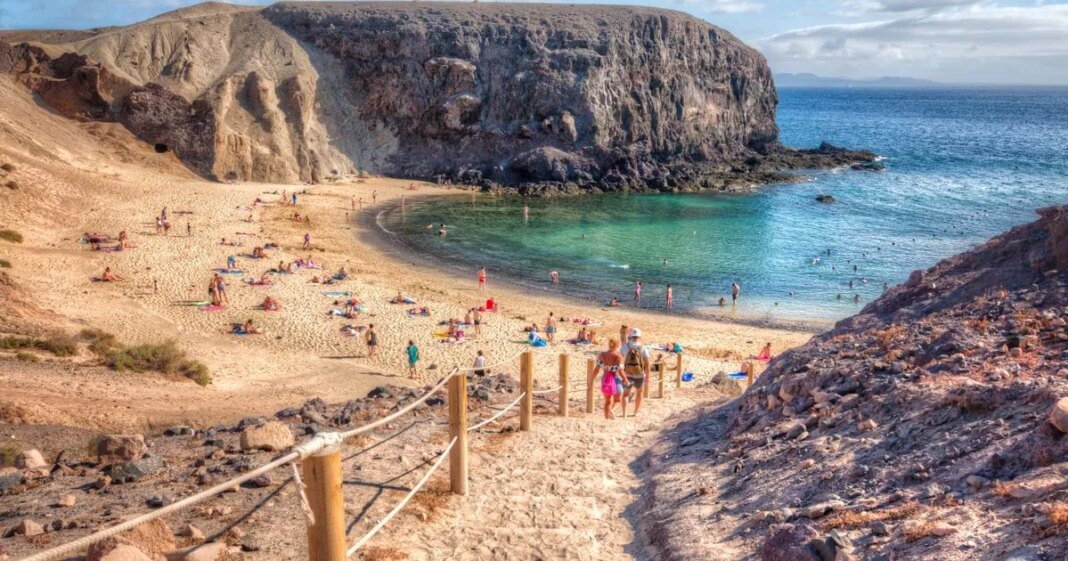

The Canary Islands have been included in a significant ‘do not travel’ list due to long-standing concerns over excessive tourism. This Spanish archipelago, situated off the North West coast of Africa, has been featured on Fodor’s ‘No List’ for 2026, an annual publication that aims to raise awareness about destinations facing unsustainable tourism pressures.
Fodor’s has highlighted the increasing strain on the Canaries, citing that in the first half of 2025, the islands welcomed 7.8 million visitors and served over 27 million airport passengers, marking a 5% rise from the previous year. Local residents, frustrated with the continuous influx of tourists, staged protests in Tenerife, Gran Canaria, and Lanzarote under the slogan “Canarias tiene un límite” (The Canaries have a limit), expressing concerns about the impact of tourism growth on housing affordability and environmental sustainability.
Tourism plays a vital role in the Canary Islands, contributing over a third of the region’s GDP and employing around 40% of its population. However, the surge in tourism has led to challenges such as traffic congestion, escalating rental prices, and limited housing availability for locals. Organizations like Asociación Tinerfeña de Amigos de la Naturaleza have raised alarms about the saturation of vacation rentals, stating that genuine local spaces are disappearing due to overcrowding and excessive tourist numbers.
Statistics reveal that in six areas across the Canaries, there are more tourist lodging options than those available for residents, with an average of eight holiday rental spaces per 100 inhabitants. A significant portion of the approximately 200,000 holiday apartments are owned by individuals who own only one property, indicating a trend of locals converting their residences into rental units to capitalize on the high tourist demand in the EU’s most visited tourist region.
Critics have long warned about the strain of overtourism on the Canary Islands, emphasizing the need for sustainable tourism practices to preserve the region’s unique environment and culture. Efforts to address these issues include legislative measures prohibiting new properties from being used for short-term rentals without permits, granting neighbors the authority to veto tourist accommodations in shared buildings, and empowering communities to make decisions on the use of apartments for tourism purposes.
The region’s agricultural challenges are also highlighted, with only 10% of the land being cultivated and a heavy reliance on imported food, leading to environmental and waste concerns. The pressure on essential resources like water due to population growth and tourism expansion is a pressing issue that requires attention.
In response to these challenges, the regional government has implemented regulations to control short-term rentals, aiming to strike a balance between tourism development and the well-being of local communities. National reforms have followed suit, granting more authority to residents and communities in managing the impact of tourism on the Canary Islands.